

Dry Needling
A Safe and effective option
Targeted treatment for tight, sore, and spasming muscle—used to calm pain, restore mobility, and get you back to training and moving the way you want to.
Immediate availability
30-minute appointments
Performed by a certified clinician
What dry needling is
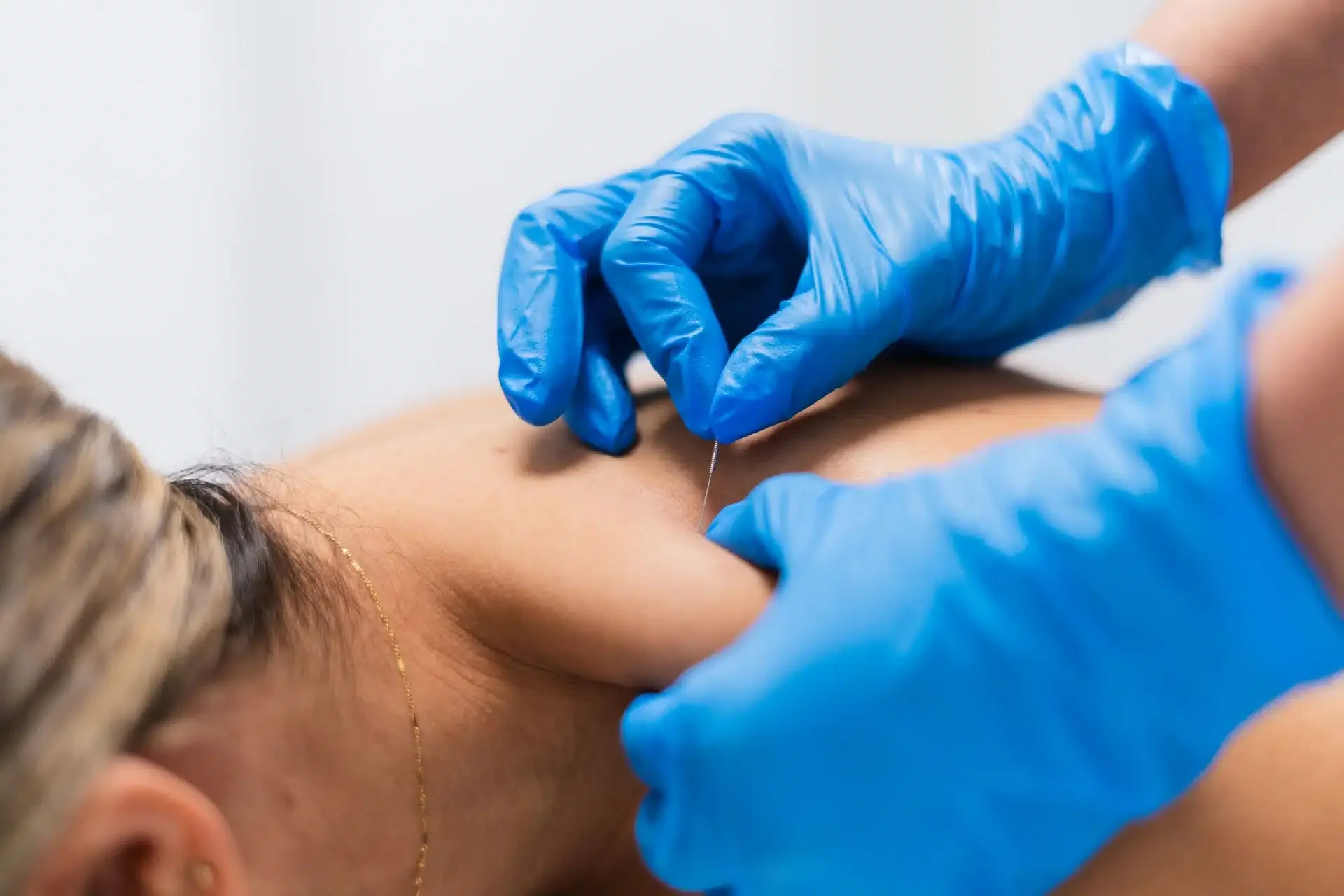
Dry needling is a treatment in which a thin, sterile, single-use needle is inserted through the skin into muscle or connective tissue. Nothing is injected, which is where the name “dry” comes from. The needle itself is the treatment.
The target is usually a trigger point: a tight, irritable band within a muscle that is tender to press on, often refers pain elsewhere, and limits how well the muscle lengthens and contracts. Needling that tissue can reduce local tension, quiet the pain response, and improve how the muscle moves, which then makes subsequent strength and mobility work far more productive.
At Polar Physical Therapy, dry needling is offered as a standalone treatment, as well as part of a comprehensive treatment plan. It is excellent at creating a window of less pain and better motion—what you do inside that window is what makes the changes last.
Where it fits in your care
Needling is often used alongside joint mobilization, soft tissue work, stretching, neuromuscular reeducation, and strength training, and can be a crucial piece in all four stages of the process that every comprehensive plan follows: symptom relief, mobility, strength, then performance and prevention.
Dry needling is not acupuncture
The two use similar needles but the philosophy, training, licensing and practice are all different.
Dry needling
Performed by a physical therapist as part of a plan of care. Needle placement is based on a musculoskeletal exam, which helps identify the specific muscle, tendon, or trigger point that reproduces or drives your symptoms. Sessions are brief and treatment is immediately followed by loading that tissue.
Acupuncture
Practiced by licensed acupuncturists within traditional Chinese medicine. Needle placement follows established acupuncture points and meridian theory, and treatment is aimed more broadly at systemic and whole-body concerns rather than a single movement impairment.
What it’s used for
Dry needling is applied to muscular and myofascial contributors to your symptoms. Common examples, by region:
-
Headaches originating from the neck
General neck pain and stiffness
Upper trap and levator scapulae tightness
-
Rotator cuff strain and shoulder impingement symptoms
Biceps and pectoral tightness
Elbow tendon pain, including tennis and golfer's elbow
Forearm, wrist, and hand overuse pain
-
Upper, mid, and low back pain and muscle guarding
Paraspinal and quadratus lumborum spasm
Gluteal and deep hip muscle pain referring down the leg
Hip flexor tendinopathies
-
Hip flexor, hamstring, quad, and calf strains and tightness
Gluteal tendon pain and lateral hip pain
Knee pain, including patellar and IT band-related symptoms
Achilles and plantar heel pain
-
Needling isn’t just for injuries. If you train hard and want to address tight, achy muscles so you can recover faster and keep your volume up, a 30-minute needling session is a reasonable standalone tool.
-
Needling can help with protective muscle guarding and secondary tightness around a healing or previously operated-on area, as well as for addressing muscles that have been tight and painful for >6 weeks.
This list is not exhaustive. See the full list of conditions treated or ask about your specific situation on a free discovery call.
What a session looks like
Dry needling is never done to you without context. Here is the sequence to ensure that it’s effective for you and your needs.
Important Note
All new patients/clients interested in dry needling only appointments must schedule and complete an initial evaluation first.
I check your motion, strength, and the specific tissue that reproduces your symptoms, and confirm needling is the right choice that day.
1. Assessment
We review what I am treating, what you may feel, and any reason to hold off. You are positioned comfortably and your skin is cleaned.
2. Consent and Setup
Needles are placed in the target tissue and may be left still, gently moved, or repositioned. Most areas take only a few minutes.
3. Treatment
Needles come out and we immediately use the new range through mobility, activation, and loading, so the nervous system keeps the improvement.
4. Take Advantage
(only for full treatment sessions)
What you can expect
Honest expectations matter more than reassurance. Here is what people typically report.
-
The needles are far thinner than the ones used for shots or blood draws and most people do not feel them enter the skin. What you may feel is a deep, dull ache or a quick involuntary twitch of the muscle when the needle reaches an irritable spot. The twitch is brief and is often a sign we found the right tissue.
-
Most notice significant relief alongside looser, easier motion within minutes.
-
Soreness similar to a hard workout in the treated area is common and usually settles within 24 to 48 hours. A small amount of bruising is also common, but gentle movement, water, and good sleep can help.
-
You should notice a difference just in the way you feel, but I’ll measure something objective—range of motion, strength, a painful test—before and after, so you can see the improvements for yourself in real time.
-
It depends. Acute muscle guarding can resolve in just 1-3 visits, while long-standing problems may take 6-8 visits over several weeks and rely more heavily on what you do in addition to dry needling. If two or three sessions do not impart any meaningful change, we adjust the plan.
-
Because what you do after needling is so important, you will always receive guidance and recommended stretches/exercises to do even if you sign up for dry needling only.
Who it is right for—and who should wait
Dry needling suits most adults who have muscular pain, stiffness, or guarding that has not responded to movement and manual treatment alone.
Some situations mean we modify the treatment, choose a different area, or use another tool entirely. Tell me if any of the following apply to you and the decision to move forward with dry needling will be made together at your visit.
Tell me about
Use of blood thinners, or a bleeding/clotting disorder
Pregnancy, or possible pregnancy
A strong fear of needles
Active infection, open wound, or a rash over the treatment area
Lymphedema or a history of lymph node removal in that limb
A compromised immune system
Recent surgery, implants, or hardware near the area
A known nickel or metal allergy
A pacemaker or other implanted electrical device
None of these are automatic disqualifiers, but they may change how, where, or whether we needle on a given day.
Cost and Scheduling
Transparent pricing with payment collected at the time of service. No insurance red tape, no prior authorization, no surprise bills.
Dry Needling Only
A focused 30-minute session for muscle tension and recovery. An initial evaluation is required before booking a needling-only visit, so that treatment is based on an exam rather than a guess.
$70
30-minute appointment
Needling is also included at no additional cost within a standard Individual Session ($150) or Initial Evaluation ($200) when it is appropriate for your plan. Cash, check, HSA/FSA cards, and all major credit and debit cards are accepted. See the full service and pricing list or the payment policy for details.
Common Questions
-
Most people describe it as an odd deep ache with a brief muscle twitch, rather than sharp or painful. Remember, you are in control the whole time and we stop or adjust the instant you say so. And if needles are a hard no for you, that is completely fine; there is plenty we can do without them.
-
Research generally supports dry needling for short-term reduction of musculoskeletal pain and improved mobility, particularly for trigger-point-related pain. Evidence for long-term change from needling alone is weaker, which is exactly why I use it to open a window and then fill that window with mobility work, activation, and strengthening. That combination is where lasting results come from.
-
Dry needling:
Western anatomy and neurophysiology
Targets a specific muscle, tendon, or trigger point found on exam
Goal: change muscle tone, pain sensitivity, and movement
Delivered as part of a physical therapy plan of care
Usually 5-10 minutes per area, often 1-6 sessions
Acupuncture:
Traditional Chinese Medicine framework
Targets points along meridians and channels
Goal: influence the flow of qi and whole-system balance
Delivered by a licensed acupuncturist
Needles often retained 15-30 minutes
The only notable similarity is the equipment that is used.
-
When performed by a trained clinician using sterile, single-use needles and clean technique, dry needling has a strong safety record. The common side effects are minor and short-lived: soreness, small bruises, and occasional lightheadedness. Serious adverse events are rare, and screening plus careful technique is how I keep them that way.
-
No. Wisconsin allows direct access to physical therapy, so you can schedule with me directly for any and all of my services without seeing your physician first.
-
Yes, once you have had an initial evaluation, you can book 30-minute needling-only visits as a standalone treatment whenever you want.
-
Wear clothing that gives access to the area being treated: shorts, a tank top, or loose layers. Eat something beforehand and arrive hydrated; needling on an empty stomach can increase the chance of feeling lightheaded.
-
Yes. HSA and FSA cards are accepted, and I can provide documentation if your plan requires it.
Not sure where to start? You’ve got options!
If you're on the fence or have more questions, a discovery call is right for you. This consultation is a chance for you to tell me your story and ask any questions you might have without the pressure to commit to anything further. Simply click the button below, fill out the form, and I will reach out soon.
If you’re ready to move forward with care, simply book an appointment and fill out the intake form that is emailed to you prior to your visit. Your first visit is an initial evaluation where I will take the time go over your history, conduct a thorough assessment, start treatment, and collaboratively discuss a plan.